Manchester City Stadium


Supporting UN Sustainable Development Goals



Project description
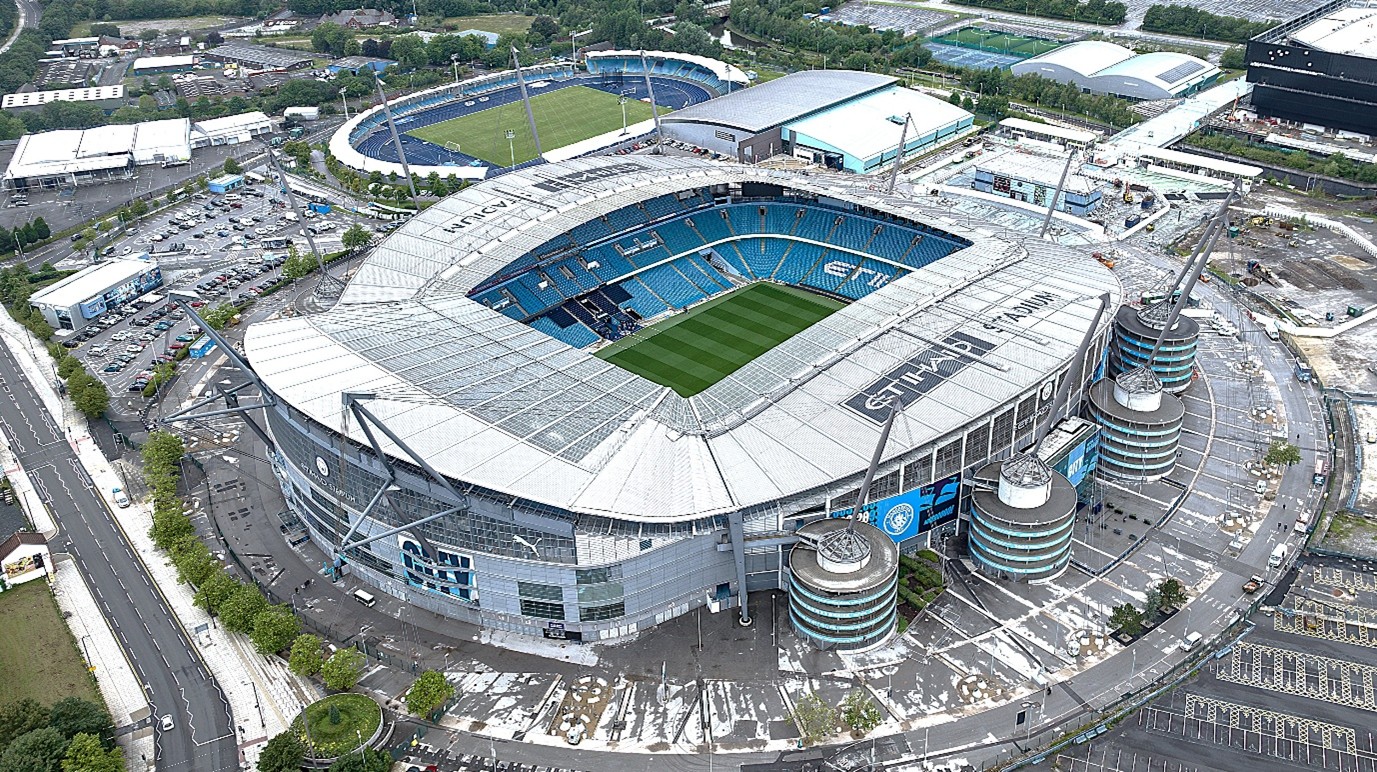
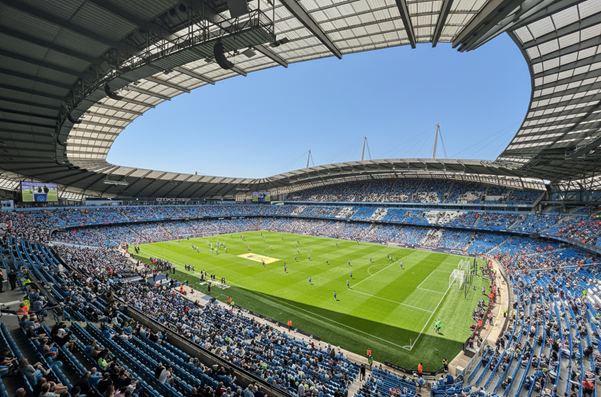
The City of Manchester Stadium was originally built for the Commonwealth Games after a downsized Olympic bid. Located in East Manchester, it featured a bowl and track layout for athletics. After the Games, it was transformed into a bespoke football venue, the home of Manchester City FC. The conversion involved lowering the pitch, adding a new lower-tier stand for improved sightlines, and replacing a temporary end stand with a permanent structure. The entire transformation was completed in under 11 months, setting a benchmark for adaptive stadium design.

Design constraints
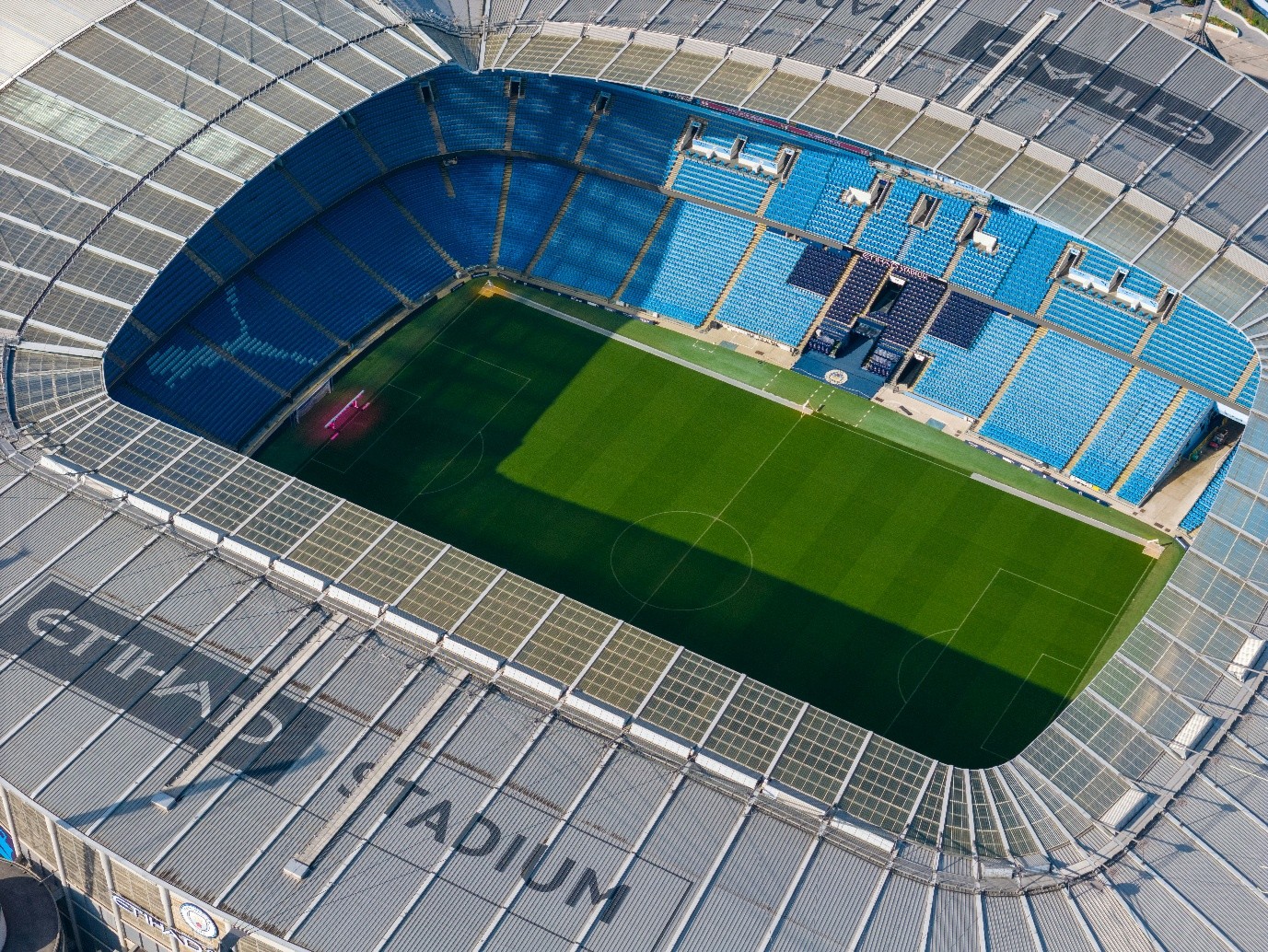
The original athletics layout placed seating far from the pitch, unsuitable for football. Conversion required lowering the pitch and adding a new stand within the existing footprint while preserving the roof and upper tiers. The interface between the modified bowl and roof introduced challenges in lateral stability and movement control. Urban site constraints and legacy infrastructure demanded careful integration of new foundations, access routes and services without disrupting surrounding areas.

Engineering response
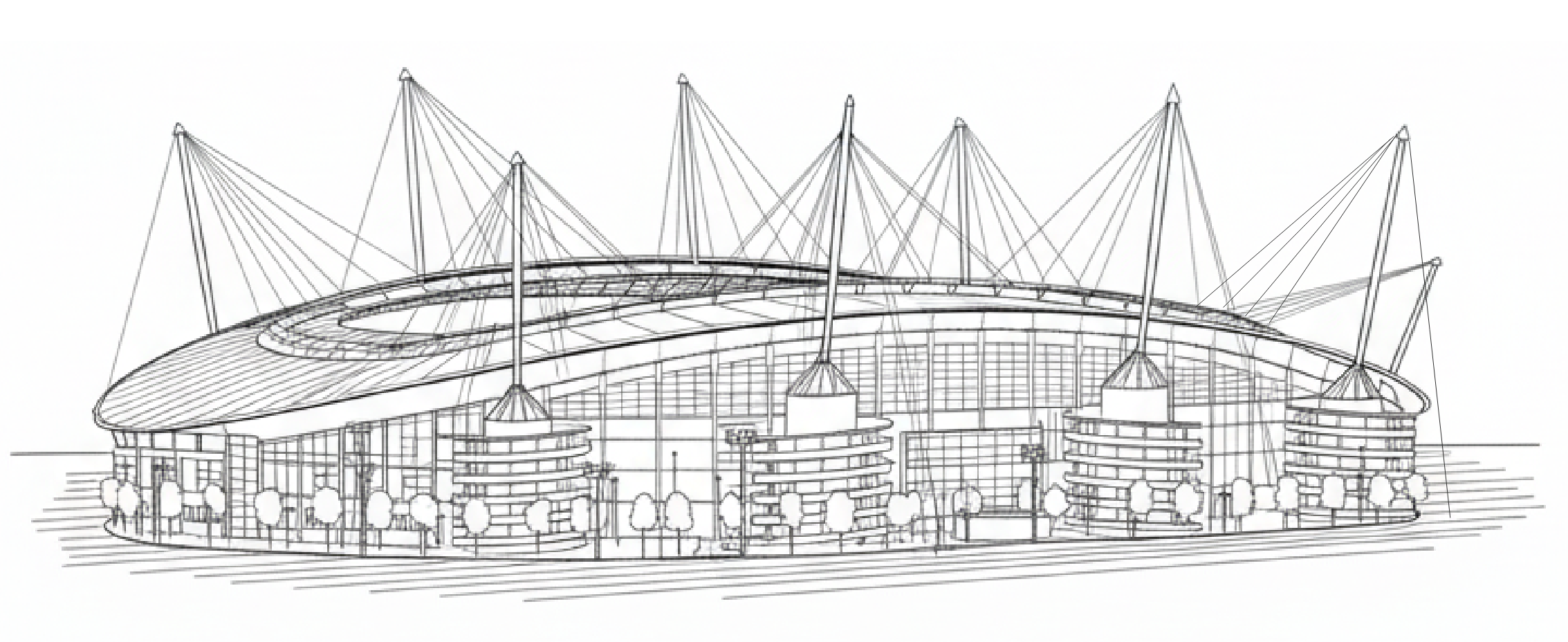
The strategy focused on reusing the existing structure while excavating the central bowl to lower the pitch and add a new lower tier close to the touchline. This minimized demolition and preserved the roof and upper tiers for cost efficiency. Specialist tension and lateral foundations stabilized the modified bowl, while ramp towers provided circulation and housed plant rooms, reducing basement size. Exposed concrete offered durability and economy, integrating structure and services for a lean, efficient design.

Impact
The conversion delivered a world-class football venue with minimal waste and maximum value in record time. Lowering the pitch and adding a new seating bowl created an intimate match-day experience, while integrated ramp towers improved functionality and robustness. The approach balanced cost, performance, and architectural ambition, making the stadium a celebrated example of adaptive reuse. Today, it stands as a model for transforming legacy infrastructure into vibrant, long-term assets.
Mark Boyle worked on this project while he was with Arup Associates.