‘Project 400’, an alternative scheme for Everton FC


Supporting UN Sustainable Development Goals



Project description
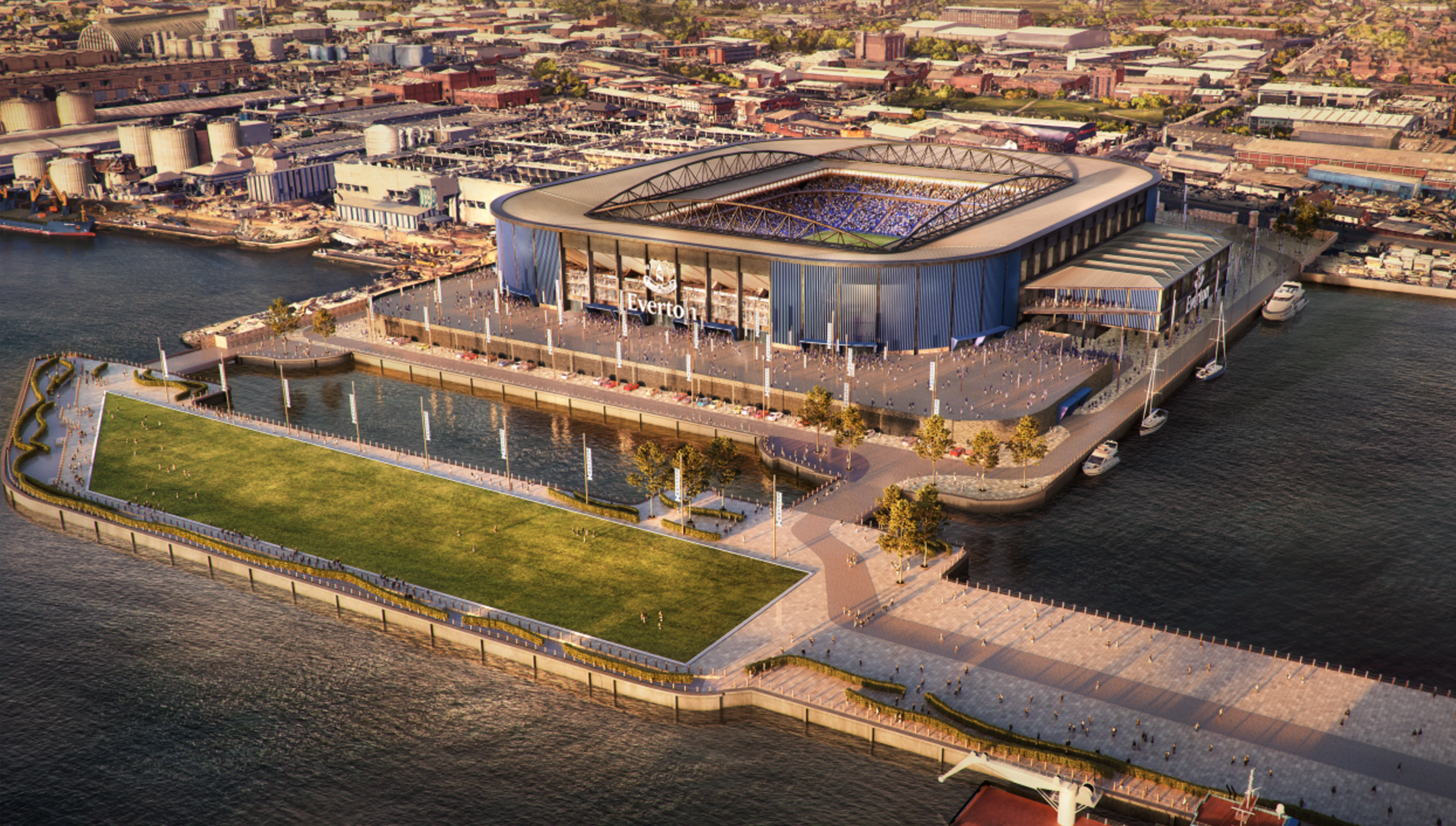
During planning for Everton FC’s new stadium at Bramley-Moore Dock, the emerging design exceeded budget expectations. Mark, Alex and Theo collaborated with WOO Architects and Gardiner & Theobald on Project 400 – a project to develop an alternative concept that balanced ambition with cost.
Rather than simple value engineering, this was a fresh approach shaped by site constraints and efficiency. The proposal featured a compact, overlapping two-tier bowl with a single box level wrapping the stadium, fitting snugly within the dock site while preserving space for an external concourse.

Design constraints
The dockside location imposed strict spatial and structural limits. Due to the site’s footprint, proximity to the canal, and heritage context we selected a compact design sensitive to surroundings. Budget constraints demanded reduced structural complexity, minimal material use, and avoidance of extensive dock infill. Height restrictions and the need for efficient circulation and hospitality spaces added further challenges, requiring innovative solutions to deliver functionality without excess.

Engineering response
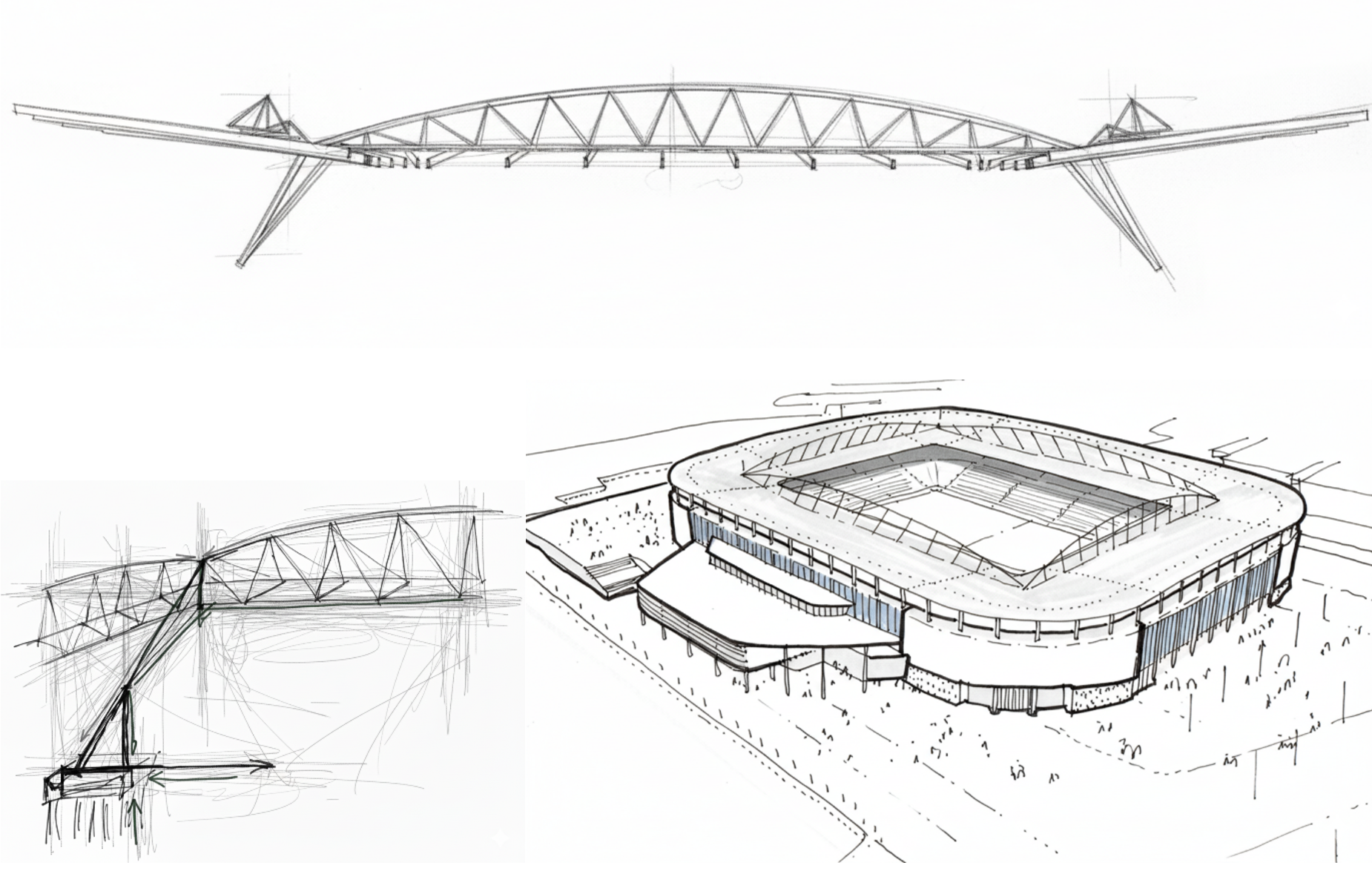
The alternative design introduced a smart roof supported by inclined corner columns, reducing spans and structural depth for cost savings. Hospitality spaces were placed outside the main footprint, elevated over the southern concourse for open-plan layouts and direct stadium access. Ramp towers integrated plant rooms and toilets, eliminating basement construction and simplifying services. The compact bowl minimized infill, preserving the adjacent canal and enabling future development west of the site.

Impact
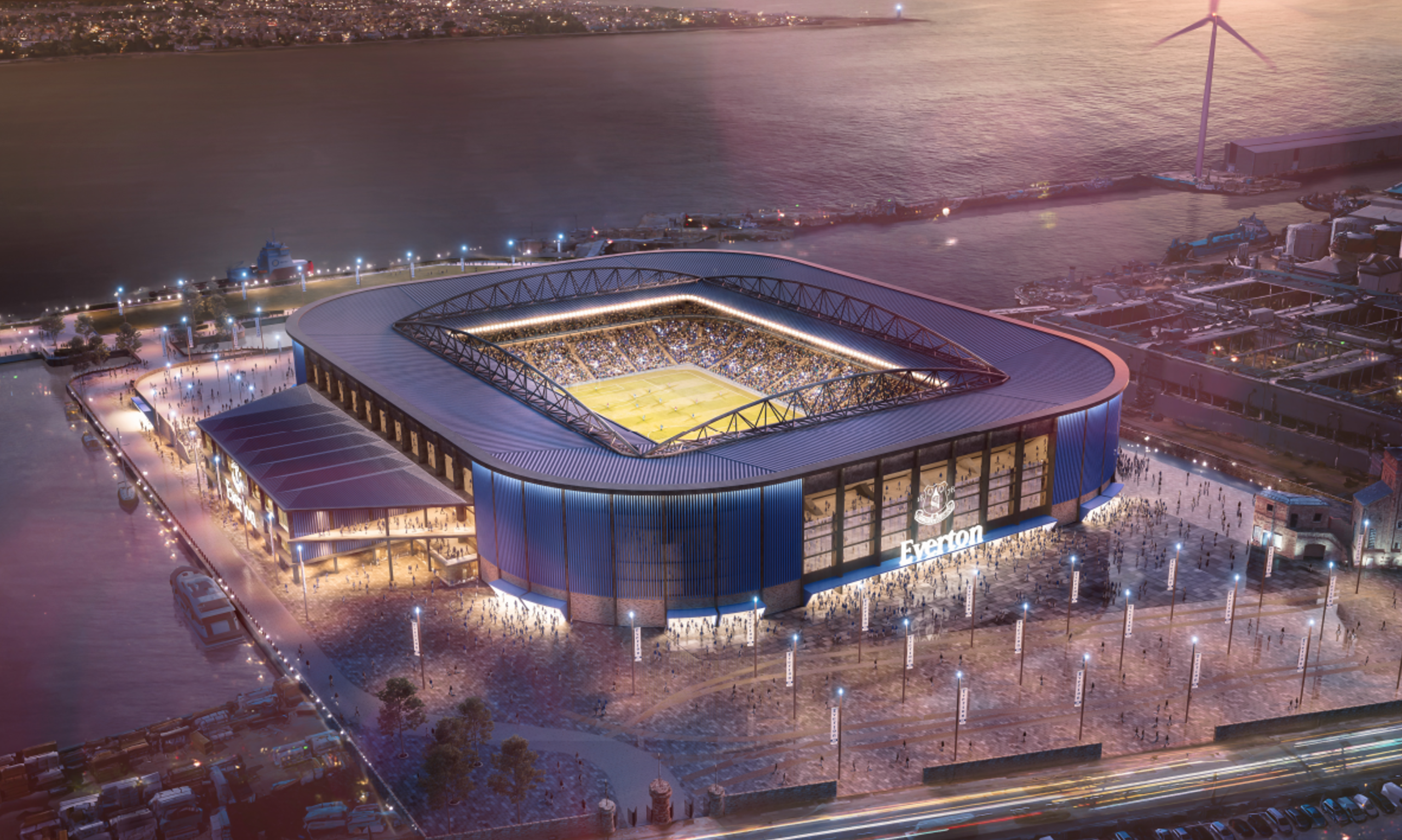
The concept proved the brief and budget could align through constraint-driven design. It offered a cost-effective, elegant solution that respected heritage, reduced complexity, and maintained ambitions for a world-class venue. The study influenced project direction toward affordability and buildability while preserving architectural integrity. While ultimately, the original elevated scheme was retained, requiring canal infill – a decision later linked to Liverpool’s docklands losing World Heritage status, some aspects of the value engineering approach developed as part of this project were adopted in the final design.
The structural team consisted of Mark Boyle, Alex Edmonds and Theo Mourtis who worked on this project while they were with Robert Bird Group.